Written by Lisa Mbiro and Buhlebenkosi Dube
Reviewed and edited by Yeukai Kaponda and Chido Nyaruwata
Climate change is no longer a distant warning for communities in Zimbabwe. In the 2025 Global Hunger Index, Zimbabwe ranks 90th out of 123 countries with sufficient data to calculate 2025 GHI scores. With a score of 20.9 in the 2025 Global Hunger Index, Zimbabwe has a level of hunger that is serious. It is a reality shaping daily life, livelihoods, and futures.
In Checheche, nestled in the lush landscapes of Chipinge District, and Kezi, in the rolling hills of Matopo, Matabeleland South, women and girls are at the forefront of navigating challenges that threaten not only food security but the very fabric of community life. Their stories, shared through the lens of community radio, illuminate both the severity of climate impacts and the remarkable resilience that emerges in the face of adversity.
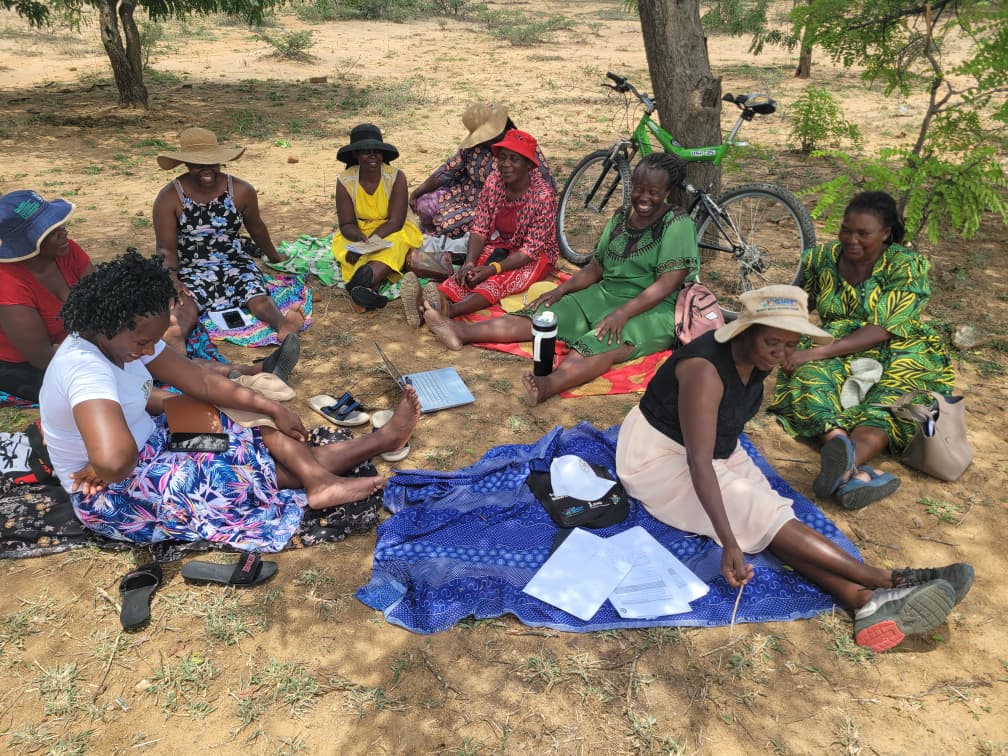
Under the Girl-led Disaster Risk Reduction (DRR): Securing Sustainable Futures project, Flames and Lilies Climate Initiative (FLCI) has partnered with Vemuganga FM in Chipinge District (Manicaland province) and Bayethe FM in Matopo District (Matabeleland South province) to amplify these voices. Through focus group discussions, mapping exercises, and storytelling sessions facilitated by our dedicated community radio volunteers, women have shared their lived experiences, revealing both the common threads of struggle and the unique challenges of each community.


In both Checheche ( a area found in Chipinge district ) and Kezi, ( area found in Matopo district ) women described how prolonged droughts, water scarcity, and unpredictable weather patterns have transformed their daily lives. Climate change is having a devastating impact on our community,” said Councillor N Nkomo from Kezi. Crops fail, rivers dry up, and food insecurity deepens, creating ripple effects that touch every aspect of community life.
Beyond environmental impacts, these changes intersect with social challenges: gender-based violence, early marriages, unemployment, and health concerns are exacerbated by climate stress. Girls are being forced into early marriage and transactional sex due to lack of access to education and economic opportunities,” said Mrs S. Moyo, a villager. According to the UN Spotlight Initiative, the relationship between Climate and Gender violence will worsen with time. Before the end of the century, 1 in 10 cases of intimate partner violence (IPV) will be linked to climate change.

In Checheche, women highlighted that due to the collapse of the cotton industry, there is mass unemployment. This was a key source of employment and for taking care of their families. According to the World Bank, 80% of agriculture, accounting for 67% of total employment in the country, is rainfed. Agriculture is one of the most vulnerable sectors to the effects of climate change, as highlighted through the experiences of families in Checheche and Kezi.
Yet, despite these difficulties, women’s reflections carry hope, ingenuity, and a determination to act. Both communities emphasised the importance of climate-resilient practices: planting trees, managing waste, promoting climate education, and ensuring that women’s voices are central in local decision-making on environmental issues. Their collective call resonates with a Shona and Ndebele term that captures the essence of their approach: mushandirapamwe—working together to create resilient, just, and sustainable communities.
While the challenges are shared, each community faces distinct realities shaped by geography and local climate conditions. In Checheche, the drying Save River has become a stark symbol of water scarcity. Farming, once reliable, is now fraught with uncertainty, pushing families to explore alternative ways to sustain livelihoods. Here, women and the broader community maintain traditional Makoto rain-making ceremonies, a practice rooted in culture and spiritual hope, reflecting a blend of ancestral wisdom and adaptive response to environmental stress.

In Kezi, erratic rainfall and rising temperatures create uncertainty for farmers, threatening harvests and livestock. Women in the area have responded with creativity and collaboration. The aim is to form groups to generate income through food sales and livestock management. These initiatives will not only provide economic stability but also foster community solidarity and leadership among women, positioning them as agents of change in the fight against climate challenges.
Community radio stations, like Vemuganga FM and Bayethe FM, are more than platforms for broadcasting. They are vital spaces where local knowledge, lived experiences, and grassroots solutions converge. These stations can give voice to women, allowing them to share stories, exchange ideas, and influence community action. From our focus group discussions, women provided solutions such as mobilising tree-planting campaigns to discussing climate-smart agricultural practices. We hope to share these solutions and resources through radio programs with our partners. Community radio bridges the gap between information and action, helping communities respond effectively to local climate threats.

The focus group discussions facilitated through FLCI’s partnership with these radio stations demonstrate the power of storytelling in driving change. By capturing women’s experiences, radios serve as both a mirror and a megaphone: reflecting local realities while amplifying solutions that can inspire neighbouring communities and policymakers.
The experiences of women in these communities underscore several key lessons. First, climate change is not just an environmental issue; it intersects deeply with social and economic systems, particularly affecting women and girls. Second, resilience emerges when communities take collective action, leverage local knowledge, and empower women to lead solutions. Third, communication platforms like community radio are indispensable, transforming isolated experiences into shared learning and mobilising grassroots climate leadership.

Flames and Lilies remains committed to supporting women-led climate action, amplifying voices from Checheche, Kezi, and beyond. These communities teach us that adaptation is possible when people come together, combine tradition with innovation, and place women at the centre of decision-making. As these stories make clear, building resilience is not only about surviving climate change. It is about fostering hope, leadership, and sustainability in every corner of Zimbabwe.
 Flames and Lilies Climate Initiative