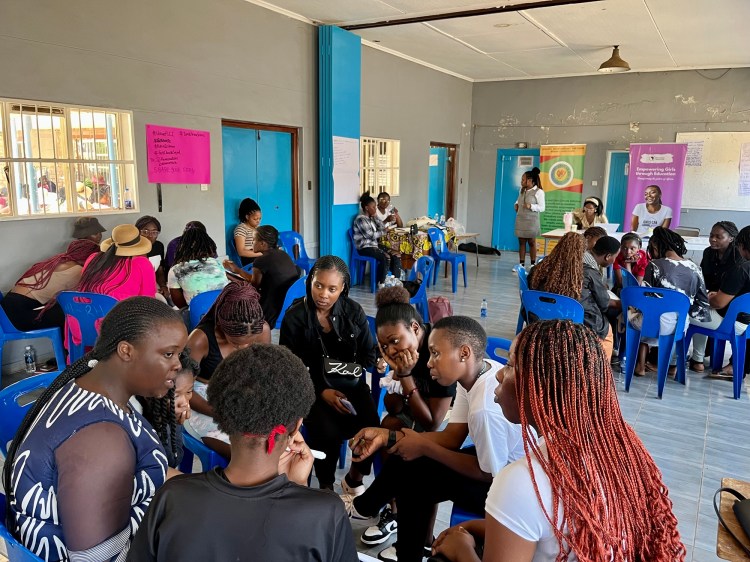
Berha Kufa participated in our Girls’ Led Disaster Risk Reduction Workshop series with our partners Usawa Institute and Mufakose Community Development Trust. This workshop ran for 5 days in Mufakose, Harare.
Water supply has always been a challenge in high-density suburbs like Chitungwiza, where we receive water from the municipality only once a week. However, due to climate change, particularly in the form of heat waves and drought, our last water supply in 2024 was in June. This situation has led to the widespread occurrence of waterborne diseases like cholera, poor menstrual hygiene, and poor agricultural production. Sewage bursts have become so common that some residents now refer to Chitungwiza as “Musha wemasewage” (the home of sewage bursts).

Although community boreholes were drilled, they soon dried up due to the extreme heat. Even when operational, the high demand forced residents to endure long queues, often waking up as early as 4 a.m. to fetch water. This borehole system also exposed young girls to violence from borehole marshals and resulted in late school attendance as they struggled to collect water for their households. In response to the crisis, some well-off residents began drilling boreholes at their homes for sale.
However, by the end of the year, poor electrical supply caused the cost of borehole water to escalate from $1 for 10 buckets to $1 for 6 twenty-liter buckets. This increase has been an overwhelming burden for many who rely on low-income jobs, such as informal trading.

Recently, some community members have started joint borehole-drilling cooperatives. In this system, neighbours from about ten houses collaborate to drill a borehole at a location professionally assessed by the municipality as suitable. This initiative reduces costs while addressing the water crisis. However, it is essential to educate other community members and provide them with legal advice regarding this initiative to prevent future problems.
 Flames and Lilies Climate Initiative